

How to Plan an 11-Day Luxury Tanzania Great Migration Safari
Planning an 11-Day Luxury Tanzania Great Migration Safari
An 11 day Tanzania Great Migration safari gives you enough time to experience the Serengeti without making the journey feel rushed.
You can spend meaningful time following wildlife.
You can experience the changing landscapes of northern Tanzania.
You can descend into Ngorongoro.
And you can enjoy the luxury of returning to an elegant camp after a day in the bush.
The secret is balance.
Do not try to visit every famous destination.
Choose the regions that work with your travel dates.
Then allow enough time for the wilderness to unfold.
For a ready-designed option, explore Beaumont Tours’ Tanzania Elite Migration and Crater Safari.
A Sample 11-Day Framework
A flexible structure might look like:
Days 1 to 2: Arrival and northern Tanzania
Days 3 to 7: Serengeti migration-focused safari
Days 8 to 9: Additional Serengeti or transition
Days 10 to 11: Ngorongoro and departure
This is a planning framework, not a fixed itinerary.
The actual routing should respond to migration patterns, accommodation availability, flight schedules and your travel dates.
Days 1 to 2: Arrive in Northern Tanzania
Most luxury Tanzania journeys begin around the northern safari circuit.
Arrive and settle into your accommodation.
Keep the first day relaxed.
Long-haul travel can be tiring.
There is no need to begin with a demanding schedule.
Enjoy dinner.
Rest.
Then prepare for the safari.
Days 3 to 4: Enter the Serengeti
The journey into the Serengeti is part of the experience.
The landscape gradually changes.
Settlements become less frequent.
The horizon opens.
Acacia trees appear.
Then wildlife begins to emerge.
Depending on the routing, a regional flight can reduce road travel and place you closer to your safari destination.
Days 5 to 7: Follow the Migration
These days form the heart of the journey.
Early mornings.
Long stretches of grassland.
Wildlife tracks.
Herds moving across the plains.
Predators watching from a distance.
Your guide interprets the landscape.
The key is flexibility.
The animals do not follow an itinerary.
Your safari should not be too rigid either.
Why Three or More Serengeti Nights Matter
The migration moves.
That means a single night can be limiting.
Several nights give you time to explore.
If the herds are not exactly where you expected, your guide can adjust the following day’s plan.
You also have more opportunities for:
- Predator viewing
- Photography
- Scenic landscapes
- Resident wildlife
- Birdlife
- Relaxation
The Serengeti deserves time.
Day 8: Another Day in the Wilderness
Avoid rushing away simply because you have seen the migration.
There is far more to the Serengeti.
Spend another day exploring.
Maybe concentrate on predators.
Maybe focus on photography.
Maybe have a slower morning followed by an afternoon drive.
Luxury is having choices.
Day 9: Transition Toward Ngorongoro
Begin the journey toward the Ngorongoro area.
The landscape changes again.
The highlands rise.
Temperatures can feel cooler.
The crater ecosystem awaits.
Depending on the itinerary, this transition can be by road or through a combination of regional aviation and ground transfers.
Day 10: Ngorongoro Crater
Wake early.
Descend into the crater.
The scale is immediately striking.
The walls surround the basin.
Wildlife moves through the grasslands.
The experience is different from the open Serengeti.
There is no need to compare the two.
They complement each other.
Day 11: Final Morning and Departure
Enjoy a final breakfast.
Take in the landscape.
Then begin your onward journey.
Depending on your travel arrangements, you can return toward the airport or continue to another destination.
For travelers with more time, Zanzibar makes an attractive extension.
Choosing Your Serengeti Region
This is one of the most important decisions.
Your choice should be based on travel dates.
Central Serengeti
Classic landscapes and strong resident wildlife viewing.
Northern Serengeti
Particularly attractive during the migration’s northern movement and associated river period.
Western Serengeti
Interesting for travelers following the western ecosystem and seasonal migration movement.
Southern Serengeti
Particularly relevant during periods when the migration moves through the southern grasslands.
The right choice changes with the season.
Planning Around Peak Season
Peak-season safari requires advance planning.
Luxury camps in sought-after areas can fill early.
Regional flights may have limited schedules.
Premium vehicles and experienced guides are also in demand.
If your dates are fixed, begin planning well ahead.
This gives you more accommodation and routing options.
What Does Peak Season Mean for the Safari?
Peak season often means higher demand and popular wildlife-viewing periods.
It does not mean wildlife behaves according to a calendar.
Rainfall can influence migration movement.
Local conditions can change.
That is why an excellent safari operator should discuss probabilities and seasonal patterns rather than make promises.
How to Choose a Luxury Camp
Location comes first.
Then consider:
- Accommodation style
- Privacy
- Service
- Food
- Guiding
- Camp atmosphere
- Photography suitability
- Conservation credentials
- Access to wildlife areas
A remote luxury camp can feel very different from a larger lodge.
Your accommodation should match the style of safari you want.
Tented Camps vs Lodges
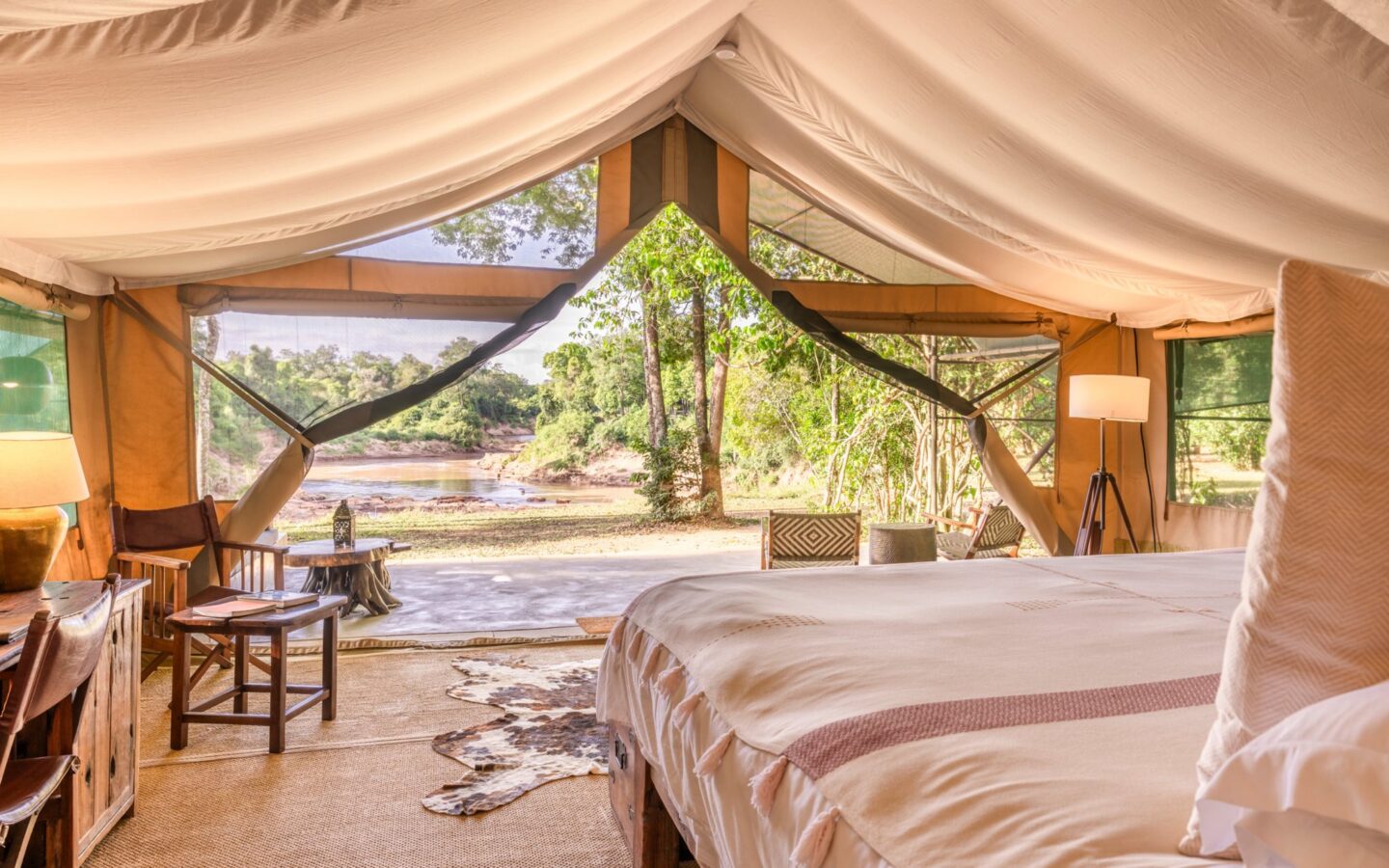
Luxury tented camps offer a strong sense of immersion.
You can hear the wilderness around you.
Lodges may offer more substantial structures and facilities.
Neither is automatically better.
The right choice depends on your priorities.
For a migration-focused journey, location and guiding should remain central considerations.
Private Safari Vehicles
A private vehicle provides flexibility.
You can determine your departure time.
Spend longer at a sighting.
Focus on photography.
Or return to camp earlier.
This is particularly valuable on an 11-day luxury itinerary where you want the experience to feel personal rather than standardized.
How to Plan the Safari Pace
Avoid early mornings every single day if you know you will want downtime.
Mix intensive game drives with slower afternoons.
Use the camp.
Enjoy lunch.
Read.
Rest.
Have a massage if available.
Then return to the bush later.
The best luxury safari is not an endurance test.
Bush Breakfasts
A bush breakfast can turn a game drive into a complete morning experience.
Imagine stopping in the open landscape.
Fresh coffee.
Fruit.
Pastries.
A beautifully prepared breakfast.
The Serengeti becomes your dining room.
Sundowners
Sundowners are another classic safari ritual.
As the afternoon light softens, your guide finds a suitable location.
The vehicle stops.
Drinks are served.
The grass becomes golden.
The sun drops below the horizon.
Then you return to camp under the evening sky.
Wildlife Photography
If photography matters to you, mention it before the safari begins.
Your guide can then understand what you want.
Photographers may prefer:
- Longer stops
- Specific light conditions
- Lower vehicle speed
- Patience around wildlife
- More time with particular species
A private vehicle can be especially useful.
What Should You Pack?
A luxury safari does not require excessive luggage.
Clothing
- Neutral-colored shirts
- Lightweight trousers
- Warm fleece
- Light jacket
- Comfortable shoes
- Hat
- Waterproof layer
Safari Equipment
- Binoculars
- Camera
- Extra batteries
- Memory cards
- Sunglasses
- Sunscreen
- Insect repellent
Travel
- Personal medication
- Travel documents
- Small day bag
- Charging equipment
If flying on regional bush aircraft, confirm baggage restrictions in advance.
What About Rain?
Even during periods traditionally considered dry, weather remains variable.
Rain can affect roads.
It can change wildlife movement.
It can alter the appearance of the landscape.
Your safari should therefore retain some flexibility.
The weather is part of the environment, not an inconvenience that can always be planned away.
Should You Add Zanzibar?
If your schedule allows, Zanzibar can provide a beautiful final chapter.
After early mornings in the Serengeti and a full day around Ngorongoro, the coast offers a complete change of pace.
Slow mornings.
Ocean views.
Spa treatments.
Fresh seafood.
Sunset.
It is the perfect counterpoint to safari.
Should You Add More Safari Destinations?
You can.
But more is not always better.
An 11-day itinerary can become exhausting if every two nights means packing and moving.
A strong combination of Serengeti and Ngorongoro may be more rewarding than trying to add every northern Tanzania destination.
Family Travel
An 11-day Tanzania safari can work beautifully for families, particularly with older children and teenagers.
Private vehicles make the schedule more flexible.
Guides can adapt activities.
Camps can be selected around family needs.
And the migration creates a powerful shared experience.
Honeymoon Travel
The Serengeti is naturally romantic.
A private dinner.
A sunset.
A luxury tent.
A candlelit evening.
A sunrise game drive.
The experience can be both adventurous and intimate.
Ngorongoro adds another dramatic setting.
For couples, an 11-day journey provides enough time to slow down between major experiences.
Conservation
Luxury safari should contribute to the future of the wilderness.
Your safari can support conservation through park fees, responsible operators, employment and community initiatives.
When selecting camps, ask how they approach sustainability and local engagement.
A beautiful safari is even more meaningful when the landscape itself benefits.
Common Planning Mistakes
Expecting a Guaranteed Migration Event
Nature does not work on schedules.
Booking Too Late
Peak-season luxury accommodation can have strong demand.
Moving Too Often
Every transfer takes time.
Ignoring Camp Location
Distance from wildlife matters.
Overpacking
Bush flights can have strict luggage limits.
Forgetting Downtime
Luxury means having time to enjoy the camp too.
A More Relaxed 11-Day Rhythm
A successful journey might follow this rhythm:
Arrival
↓
Settle into northern Tanzania
↓
Enter the Serengeti
↓
Several nights following wildlife
↓
Slow safari day
↓
Additional migration viewing
↓
Move toward Ngorongoro
↓
Crater experience
↓
Final morning
↓
Departure or Zanzibar extension
The journey feels natural.
Nothing is forced.
How Much Does an 11-Day Luxury Tanzania Safari Cost?
There is no single price.
Costs vary according to:
- Travel dates
- Camp category
- Number of travelers
- Private vehicle
- Flights
- Conservation and park fees
- Special experiences
- Room configuration
- Extensions
Peak-season travel generally requires more advance planning because demand for premium accommodation can be high.
A tailored quotation gives you the most accurate picture.
Why Beaumont Tours?
Planning a Great Migration safari requires attention to timing, geography and logistics.
The right camp must be matched to the expected seasonal movement.
Flights need to connect naturally.
Ngorongoro should complement the Serengeti rather than interrupt it.
And the entire journey should feel seamless.
Beaumont Tours can design the itinerary around your preferred dates, accommodation style and wildlife interests.
Explore the Tanzania Elite Migration and Crater Safari.
Continue with Tanzania Luxury Great Migration Safari: The Ultimate Guide and Best Places to See the Great Migration in Tanzania.
Frequently Asked Questions
How many days do I need for a Tanzania Great Migration safari?
An 11-day journey provides enough time for meaningful Serengeti exploration and a Ngorongoro experience without making the itinerary excessively rushed.
Is 11 days too long for a safari?
Not when the itinerary includes multiple experiences and sufficient downtime. The Serengeti alone can justify several nights.
When should I book a peak-season safari?
As early as practical, particularly if you have fixed dates and want specific luxury camps or locations.
Can I guarantee seeing the Great Migration?
No. Migration movement depends on rainfall, grazing and natural conditions.
Can I guarantee a Mara River crossing?
No. River crossings are unpredictable natural events.
Should I stay in Northern Serengeti?
It can be an excellent choice during periods when the migration moves through the northern ecosystem, particularly for travelers interested in the Mara River region.
Should I visit Ngorongoro?
It is a valuable complement to the Serengeti, offering a dramatically different landscape and wildlife experience.
Can I take a bush flight?
Yes, where routes are available. Many safari flights are scheduled or shared rather than private.
Can I add Zanzibar?
Yes. Zanzibar is one of the most popular extensions for travelers who want to finish their safari with several days on the Indian Ocean.
Is a private vehicle worth considering?
For a luxury itinerary, a private vehicle provides greater flexibility and allows the safari to be shaped around your interests.
Your 11-Day Tanzania Safari
An extraordinary Tanzania safari is not about rushing from one famous sight to another.
It is about staying long enough for the landscape to reveal itself.
Following tracks through the morning.
Watching a herd move across the horizon.
Waiting patiently beside a river.
Returning to camp as the sun disappears.
Then waking the following day knowing that the Serengeti may tell you a completely different story.
Add the Ngorongoro Crater and eleven carefully planned days, and you have the foundation for an exceptional luxury journey through northern Tanzania.
Discover Beaumont Tours’ Tanzania Elite Migration and Crater Safari.