

Best Places to See the Great Migration in Tanzania
Where to See the Great Migration in Tanzania
The Great Migration does not stay in one place.
That is the first thing to understand when planning a Tanzania migration safari.
The herds move through a huge ecosystem.
Their location changes with rainfall, grazing conditions and seasonal patterns.
This means choosing where to stay is more important than simply choosing „the Serengeti.“
The right region depends on your travel dates, how much time you have and which wildlife experiences matter most to you.
For a luxury safari, accommodation and guiding are equally important.
You want to be close to the wildlife story without sacrificing comfort.
For an 11-day experience combining migration and Ngorongoro, explore Beaumont Tours‘ Tanzania Elite Migration and Crater Safari.
Understanding the Serengeti Ecosystem
The Serengeti is not one uniform landscape.
It contains different regions, each with its own character.
Broadly, luxury safari planning may involve:
- Southern Serengeti
- Central Serengeti
- Western Serengeti
- Northern Serengeti
- Surrounding conservation areas
The migration moves through these landscapes during different parts of the annual cycle.
That is why a safari planner should match the region to your travel dates.
Southern Serengeti
The southern Serengeti is strongly associated with the migration’s seasonal cycle.
Open grasslands create an extraordinary setting for large herds.
Depending on timing and conditions, this region can be particularly interesting for travelers wanting to witness the early stages of the annual cycle.
The surrounding landscape can also be attractive for photography.
Central Serengeti
Central Serengeti provides a classic safari landscape.
It is accessible relative to more remote parts of the ecosystem and supports abundant resident wildlife.
This can make it useful for travelers who want migration-related experiences alongside classic predator viewing.
The region is not only about the migrating herds.
Lions, leopards, cheetahs and other wildlife are part of the broader experience.
Western Serengeti
Western areas offer a different landscape and wildlife atmosphere.
The Grumeti ecosystem is associated with one of the migration’s important river systems.
During appropriate periods, migrating animals may move through the region.
The timing is naturally variable.
For travelers interested in the western Serengeti, the best strategy is to plan according to the expected seasonal movement while allowing for uncertainty.
Northern Serengeti
Northern Serengeti is one of the most sought-after regions for migration-focused safaris.
The landscape becomes more rugged.
Rocky outcrops appear.
The Mara River runs through the broader ecosystem.
This region is particularly associated with the dramatic river-crossing season.
But there is an important distinction.
The presence of migrating herds does not mean a river crossing will happen during your stay.
The animals determine when they move.
They may gather at a crossing point for hours or days.
They may cross at a different location.
Or they may not cross while you are there.
The Mara River
The Mara River has become one of the defining symbols of the Great Migration.
Photographs of wildebeest entering the water have become iconic.
The reality is far less predictable.
A river crossing is a completely natural event.
There is no schedule.
That is why the best migration safaris focus on the entire ecosystem rather than promising one particular moment.
Why Northern Serengeti Works for Luxury Travel
Northern Serengeti has an appealing sense of remoteness.
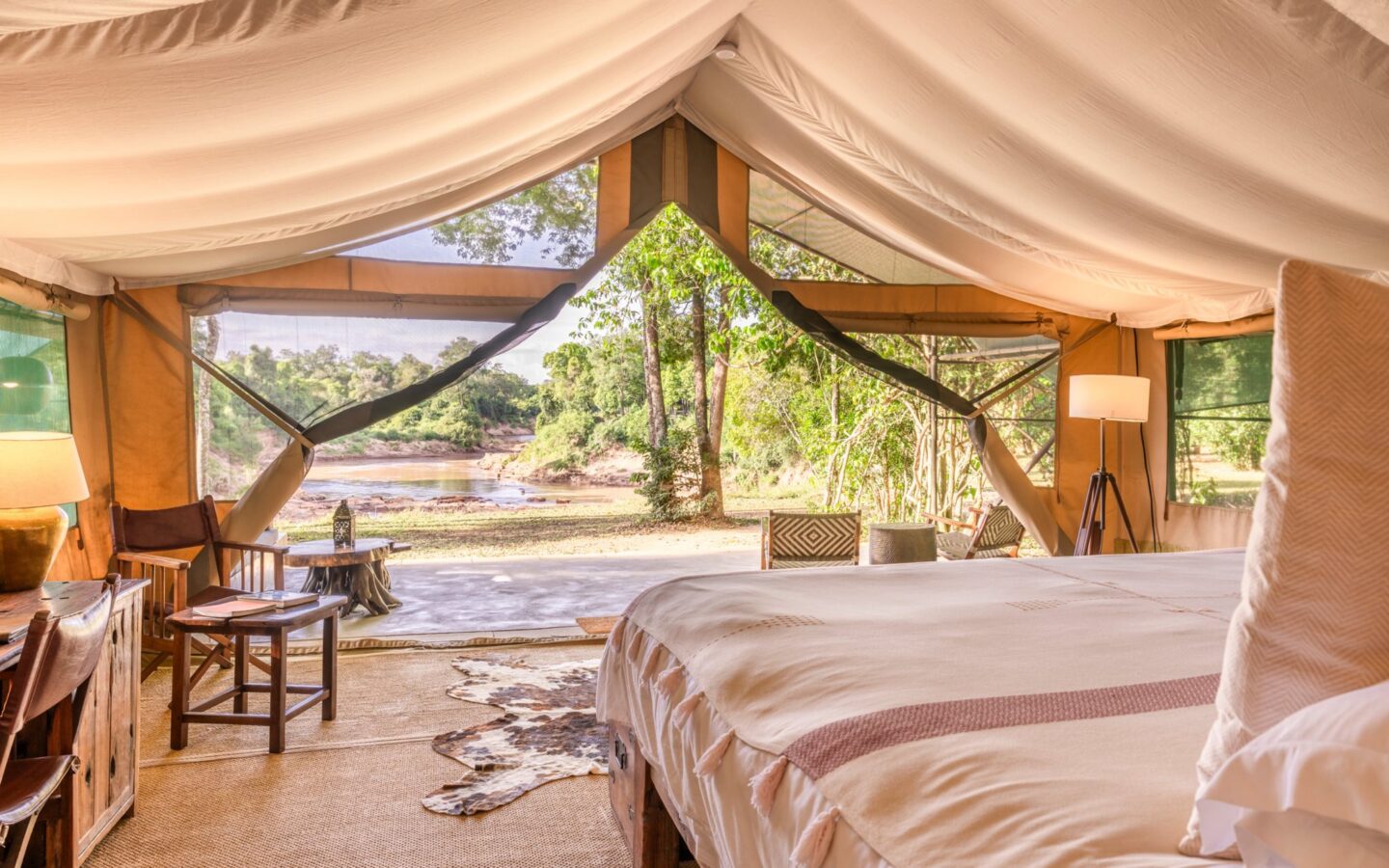
Luxury camps can provide intimate accommodation within or close to the wildlife environment.
After a day of searching for herds, return to camp.
Enjoy a shower.
Relax.
Have dinner.
Look toward the stars.
Then begin again the following morning.
The experience is about immersion rather than simply ticking off a sighting.
Ngorongoro: Not a Migration Destination, But an Essential Complement
Ngorongoro should not be confused with the Serengeti migration itself.
The crater is a separate ecosystem and wildlife experience.
But that is exactly why it pairs so well with a migration safari.
The Serengeti gives you enormous landscapes and seasonal movement.
Ngorongoro gives you dramatic topography and a concentrated wildlife environment.
The contrast creates a much richer journey.
Ngorongoro Crater
Descending into the crater is an experience in itself.
The crater walls rise dramatically around the floor.
Grasslands, woodland and wetlands create different habitats.
Wildlife moves through the landscape.
The setting feels almost enclosed compared with the open Serengeti.
For first-time visitors to Tanzania, the combination is particularly compelling.
Which Serengeti Region Should You Choose?
There is no universal answer.
Southern Serengeti
Consider it when your travel dates align with the seasonal movement through the southern ecosystem.
Central Serengeti
Useful for a classic safari experience with access to resident wildlife and broader Serengeti landscapes.
Western Serengeti
Worth considering for travelers interested in the western ecosystem and seasonal migration movement.
Northern Serengeti
Particularly attractive during periods when the migration moves through the northern ecosystem and for travelers interested in the Mara River region.
The exact location of wildlife changes.
Why Travel Dates Matter
Travel dates can completely change the character of a migration safari.
A journey planned around one part of the Serengeti may feel very different a few weeks or months later.
This is why migration planning should begin with the calendar.
Then consider:
- Expected seasonal movement
- Your preferred wildlife experiences
- Accommodation availability
- Flight routing
- Number of nights
- Budget
- Photography priorities
Peak Season and the Great Migration
Peak-season travel is popular for a reason.
Travelers often want to visit during periods associated with major wildlife activity.
But popularity also means increased demand for prime camps.
Luxury accommodation in sought-after areas can book well ahead.
Planning early gives you more choice.
How Many Nights Should You Spend in the Serengeti?
For migration-focused travel, several nights are valuable.
The more time you have in the ecosystem, the more opportunities your guide has to adapt to wildlife movement.
One night can feel rushed.
Three or four nights provide substantially more flexibility.
A longer stay allows you to experience the landscape even if the herds are not exactly where you expected them to be.
Why Private Guiding Matters
A private guide can interpret the landscape for you.
They understand tracks.
Animal behavior.
Seasonal conditions.
Road networks.
And the broader wildlife environment.
The guide can also tailor the experience.
Photographers may want more time at sightings.
Families may prefer a different rhythm.
Couples may want a slower, more romantic experience.
Migration and Predator Viewing
The Great Migration supports one of the most compelling predator-prey stories in Africa.
Large numbers of herbivores attract predators.
You may encounter lions watching herds.
Cheetahs hunting in open grassland.
Hyenas moving through the plains.
Leopards resting in trees or rocky areas.
These sightings are never guaranteed.
But the ecosystem creates the conditions for extraordinary wildlife encounters.
Wildlife Photography
Each region offers different photographic opportunities.
Southern Serengeti
Open plains and large herds can create powerful wide-angle compositions.
Central Serengeti
Classic savannah scenes and predator encounters.
Western Serengeti
River landscapes and seasonal migration movement.
Northern Serengeti
Rocky landscapes, river environments and migration-focused photography.
Ngorongoro
Dramatic crater landscapes and wildlife against steep walls.
Luxury Camps and Location
For migration travel, the location of your camp matters.
A beautiful property that is several hours from the wildlife you want to see may not be the right choice.
The best luxury camp is not necessarily the most luxurious property.
It is the one that balances:
- Location
- Service
- Accommodation
- Guiding
- Privacy
- Food
- Atmosphere
- Access
This is especially important during peak season.
Mobile Camps and Seasonal Location
Some safari camps are designed to follow seasonal wildlife patterns.
This can be particularly useful for migration-focused travel.
The advantage is simple.
Accommodation can remain closer to the wildlife story.
The exact camp structure, operating dates and location vary by property.
How Bush Flights Help
Regional flights can reduce long road transfers.
This allows travelers to spend more time in the wilderness.
A bush flight can also make it easier to combine:
Arusha → Serengeti → Ngorongoro → Arusha
or other combinations depending on available routes.
Flights are not necessarily private.
Many are scheduled or shared services.
What About the Great Migration and Zanzibar?
Many travelers extend a Tanzania safari with Zanzibar.
The contrast is beautiful.
After days of wildlife and early mornings, move to the Indian Ocean.
Slow down.
Swim.
Enjoy the beach.
Have a spa treatment.
The combination creates:
Safari + Crater + Beach
For a longer luxury holiday, it is difficult to resist.
What Should You Pack?
For migration season, pack versatile layers.
- Lightweight shirts
- Neutral trousers
- Warm fleece
- Waterproof layer
- Hat
- Sunglasses
- Comfortable shoes
- Binoculars
- Camera
- Sunscreen
- Insect repellent
Temperatures can change considerably between morning and afternoon.
If bush flights are included, check luggage restrictions carefully.
Common Great Migration Planning Mistakes
Planning Around a Guaranteed Crossing
Crossings cannot be guaranteed.
Choosing a Region Without Considering the Season
The herds move.
Spending Too Few Nights in the Serengeti
More time gives your guide more flexibility.
Focusing Only on the Migration
Resident wildlife is one of the Serengeti’s great strengths.
Ignoring Camp Location
Luxury means little if the accommodation is poorly positioned for your priorities.
The Right Way to Think About the Great Migration
Do not think of the migration as a single event.
Think of it as an ecosystem in motion.
Your job is not to force nature into a schedule.
Your job is to put yourself in the right environment, at an appropriate time, with an excellent guide.
Then let the Serengeti tell its own story.
Planning an 11-Day Migration and Crater Safari
An 11-day journey gives you enough time to combine several experiences.
A possible structure is:
Days 1 to 2: Arrival and northern Tanzania
Days 3 to 7: Serengeti and migration-focused safari
Days 8 to 9: Additional Serengeti or transition
Days 10 to 11: Ngorongoro and departure
The exact routing should be adapted to seasonal conditions, accommodation and flight availability.
Explore the Tanzania Elite Migration and Crater Safari.
Why Beaumont Tours?
Migration travel requires more than choosing a destination.
It requires timing.
The right camp.
The right region.
Experienced guiding.
Efficient transfers.
And enough nights to allow the experience to unfold.
Beaumont Tours can bring these elements together around your preferred travel dates.
Continue with Tanzania Luxury Great Migration Safari: The Ultimate Guide and How to Plan an 11-Day Luxury Tanzania Great Migration Safari.
Frequently Asked Questions
Where is the Great Migration in Tanzania?
The migration moves through different parts of the Serengeti ecosystem throughout the year.
What is the best place to see the Great Migration?
The appropriate region depends on your travel dates and the part of the migration you want to experience. Northern Serengeti is particularly associated with the Mara River period.
Can I see the Great Migration in the Ngorongoro Crater?
The Ngorongoro Crater is not the main migration destination. It provides a separate wildlife experience that complements a Serengeti safari.
Is Northern Serengeti good for migration?
It can be particularly attractive during the period when migrating herds move through northern Tanzania and the Mara River region.
Are river crossings guaranteed?
No. River crossings are natural and unpredictable.
How many days should I spend in the Serengeti?
Several nights are recommended for a migration-focused trip because wildlife movement is unpredictable.
Is peak season the best time to visit?
Peak season can be ideal for travelers seeking specific high-demand wildlife experiences, but the right timing depends on your priorities and expected migration movement.
Can I combine the Serengeti with Zanzibar?
Yes. Zanzibar provides a natural beach extension after a northern Tanzania safari.
Finding the Right Place for Your Migration Safari
The best migration safari is not necessarily the one with the most famous photograph.
It is the one that matches your travel dates, interests and expectations.
Maybe that means Northern Serengeti and the Mara River.
Maybe it means Central Serengeti and exceptional predator viewing.
Maybe it means combining several regions.
And almost certainly, it means allowing nature to remain unpredictable.
Discover the Tanzania Elite Migration and Crater Safari.